
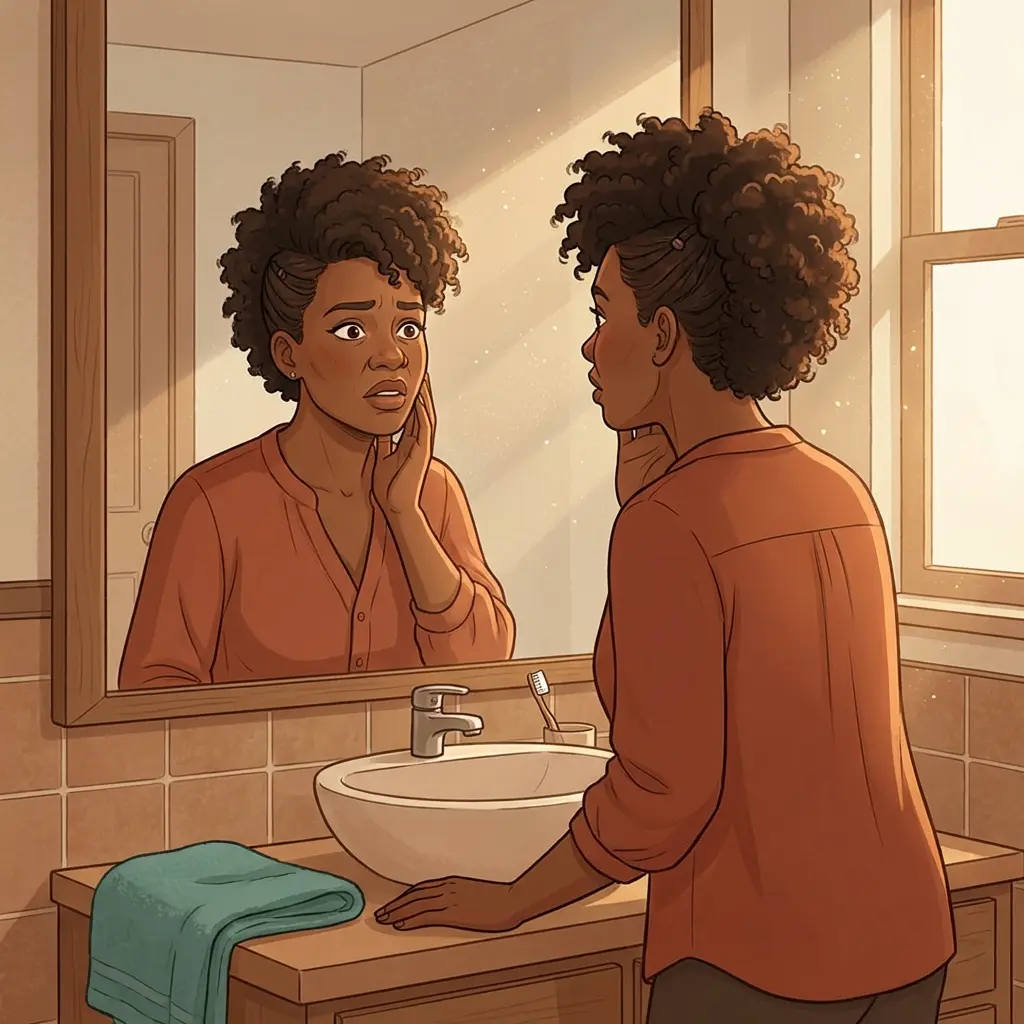

What Low Estrogen Actually Feels Like — Beyond Hot Flashes
Everyone knows hot flashes. But estrogen decline produces dozens of symptoms that most women never connect to hormones. Here's the full picture, organized by body system:
BRAIN: Brain fog, word-finding difficulty, memory lapses, reduced processing speed, difficulty concentrating, flat mood, new or worsening anxiety, depression that appeared without a trigger, reduced motivation, feeling like your personality dimmed.
BODY: Weight gain (especially belly), muscle loss, joint pain and stiffness, frozen shoulder, collagen loss (skin thinning, wrinkles accelerating, wound healing slowing), vaginal dryness, painful intercourse, urinary urgency, recurrent UTIs.
SLEEP: 3 AM wake-ups, difficulty falling asleep, non-restorative sleep, night sweats that disrupt sleep architecture.
CARDIOVASCULAR: Heart palpitations, rising cholesterol (especially LDL), increased blood pressure, blood vessel stiffness.
THERMOREGULATION: Hot flashes, night sweats, intolerance to temperature changes.
BONES: Accelerated bone density loss (2-3% per year in the early years after menopause) — completely silent until a fracture occurs.
OTHER: Hair thinning on scalp, facial hair growth (from relative androgen dominance), skin dryness and itching, tinnitus, dry mouth, changes in body odor, breast pain, dizziness.
When women say 'I don't feel like myself,' this is what they mean — the cumulative effect of estrogen declining across every system that depended on it.
What Causes Low Estrogen — And Why It's Not Just Menopause
The primary cause of low estrogen in women over 40 is the menopausal transition — perimenopause and menopause. Your ovaries gradually produce less estrogen as your egg supply declines. During perimenopause, estrogen swings wildly (sometimes surging higher than normal before crashing) before eventually settling at its postmenopausal baseline — roughly 10-20% of premenopausal levels.
But perimenopause isn't the only cause. Chronic stress and elevated cortisol can suppress ovarian estrogen production. Extreme dieting, caloric restriction, or excessive exercise can lower estrogen. Certain medications (aromatase inhibitors, some chemotherapy agents) suppress estrogen. Surgical removal of the ovaries (oophorectomy) causes immediate estrogen loss. Premature ovarian insufficiency (POI) can cause early estrogen decline in women under 40.
The key insight for women in perimenopause: the PATTERN of estrogen decline matters as much as the level. Estrogen doesn't decline in a smooth line — it fluctuates wildly, with some days higher than your 20s and other days crashing to postmenopausal levels. It's the VOLATILITY that drives many of the symptoms, not just the decline itself. This is why symptoms can vary dramatically day to day and week to week.
How to Know If Your Estrogen Is Low — And Why Standard Tests Often Miss It
Standard blood work can measure estradiol (the primary form of estrogen). But a single estradiol level during perimenopause is nearly meaningless — estrogen can swing from 30 pg/mL to 400 pg/mL within the same week. A single snapshot tells you where estrogen was at that moment, not what it's been doing.
More useful approaches: testing estradiol alongside FSH (follicle-stimulating hormone) — elevated FSH suggests your brain is working harder to stimulate estrogen production, which is an indirect sign of declining ovarian function. Testing at consistent cycle timing (day 3 for baseline) provides more meaningful data over time. DUTCH testing provides estrogen metabolite information that blood work can't.
Most importantly: SYMPTOMS matter as much as numbers. A woman with an estradiol level of 55 and severe hot flashes, brain fog, and insomnia has low estrogen FOR HER — regardless of whether the lab calls it 'normal.' Optimal estrogen levels are individual, and functional ranges are narrower than standard lab ranges.
At Pause & Reset, we evaluate estradiol in context — alongside FSH, progesterone, testosterone, thyroid, and metabolic markers. The full picture reveals what no single number can.
How to Address Low Estrogen — From Lifestyle to Therapy
LIFESTYLE FOUNDATION. Anti-inflammatory nutrition (omega-3 rich foods, colorful vegetables, adequate protein). Regular strength training (improves hormone receptor sensitivity). Sleep optimization (your hormonal system repairs during deep sleep). Stress management (chronic cortisol suppresses estrogen production). Phytoestrogen-containing foods (flaxseed, soy) provide mild estrogenic support at the margins.
TARGETED SUPPLEMENTS. DIM for estrogen metabolism support. Myo-inositol for insulin sensitization (insulin resistance worsens the hormonal picture). Magnesium glycinate for nervous system support. Vitamin D (most women are low, and D supports hormone production). These don't REPLACE estrogen, but they support the systems estrogen used to manage.
BIOIDENTICAL HORMONE THERAPY. For women with moderate to severe low estrogen symptoms, bioidentical estradiol is the most direct and effective intervention. Delivered via patch, cream, gel, or pellet, it replaces the estrogen your ovaries stopped producing with a molecularly identical version. The research supports initiating within 10 years of menopause onset for maximum benefit and favorable safety profile.
The approach depends on severity. Mild symptoms may respond to lifestyle and supplements. Moderate to severe symptoms — and the silent risks (bone loss, cardiovascular changes) — typically require hormonal support.
How Pause & Reset Evaluates and Addresses Low Estrogen
We don't evaluate estrogen in isolation. Low estrogen is part of a system-wide transition that also involves progesterone decline, testosterone changes, thyroid shifts, metabolic disruption, and inflammation. Treating estrogen alone without addressing the rest produces incomplete results.
Our evaluation includes the full hormonal panel (estradiol, progesterone, testosterone, DHEA-S), thyroid function (full panel with antibodies), metabolic markers (fasting insulin, HbA1c, lipids), inflammatory markers, and nutrient status. This tells us not just WHETHER your estrogen is low, but what else has shifted alongside it.
Treatment is personalized. Some women need estrogen only. Some need estrogen plus progesterone. Some need the full hormonal trio plus metabolic support. The protocol matches YOUR data — not a template.
If you're reading this and recognizing yourself in the symptom list — that recognition is the starting point. You're not imagining it. Your estrogen is doing something it's never done before. And there are real, evidence-based options for addressing it.