
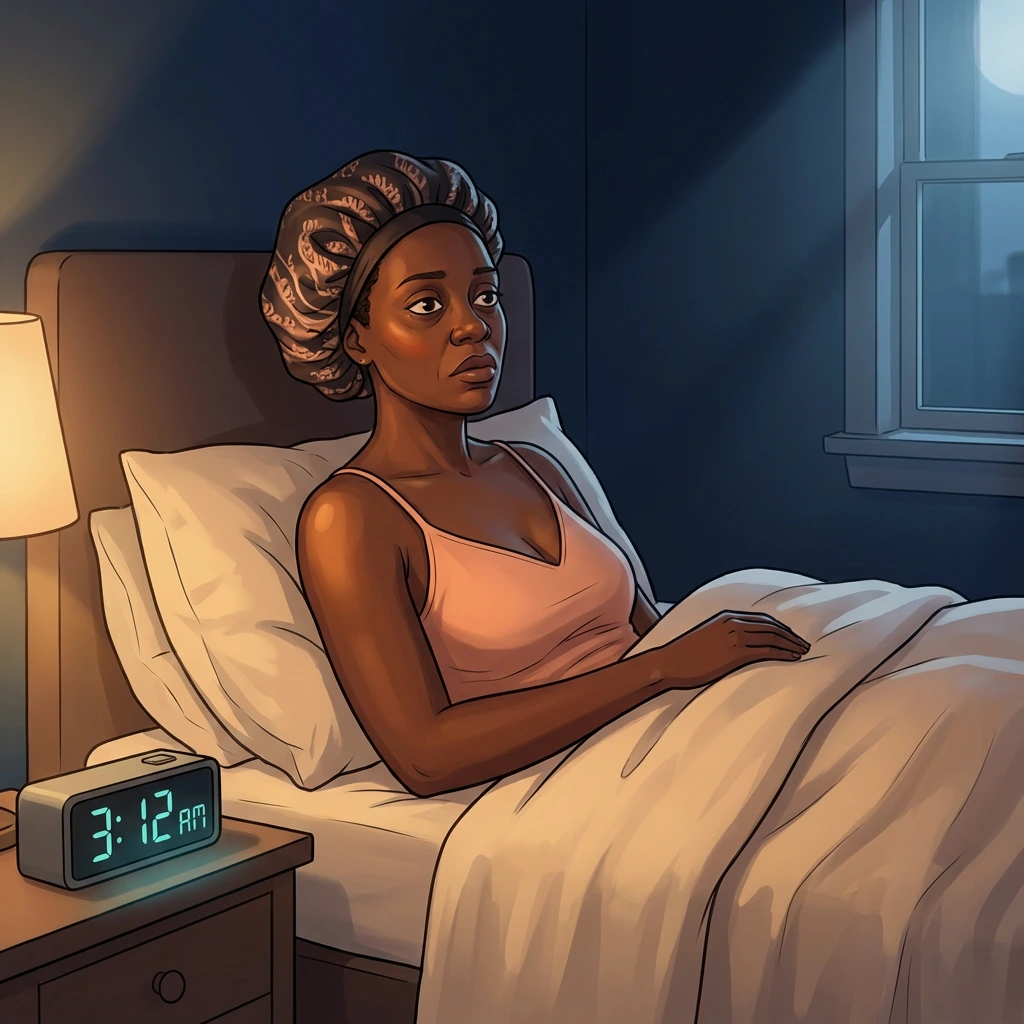

You're Tired All Day and Wide Awake at 3 AM
It follows a maddening pattern. You fall asleep fine — maybe even easily, because you're exhausted. Then somewhere around 2 or 3 AM, your eyes snap open. Not a gentle waking. A sudden, almost electric alertness. Your mind starts running immediately.
You try to fall back asleep. You toss. You breathe. You tell yourself to relax. An hour passes. Sometimes two. Eventually you drift off again, but when your alarm goes, you feel worse than when you went to bed.
For some women it's not the 3 AM wake-up — it's the inability to fall asleep at all. Your body is tired but your brain is buzzing. A restless energy in your legs. A feeling of being wired and exhausted at the same time.
Others sleep through the night but wake up feeling unrested — as if sleep lost its ability to actually restore anything. The quantity looks fine on paper but the quality has quietly collapsed.
"3:17 AM. Every single night. Eyes wide open, brain running, heart slightly racing. I thought I was going crazy."
— Age 46
Your Sleep Architecture Changed When Your Hormones Did
Sleep isn't just "being unconscious." It's a carefully orchestrated cycle of stages — light sleep, deep sleep, REM sleep — each serving different functions. Your brain cycles through these stages multiple times per night, and the architecture of those cycles depends heavily on your hormonal environment.
Progesterone is a natural sleep promoter. It enhances GABA activity in the brain, which calms neural firing and helps you transition into and maintain deep sleep. As progesterone declines during perimenopause, deep sleep becomes shallower and more fragile.
Estrogen helps regulate body temperature during sleep. When estrogen fluctuates, your thermoregulation becomes unreliable — producing night sweats and hot flashes that physically wake you up or pull you out of deep sleep without you even realizing it.
The 3 AM wake-up has its own explanation. Cortisol naturally begins rising in the early morning hours to prepare you for waking. During perimenopause, this cortisol rise can become exaggerated or shifted earlier — waking you hours before you should be up, with a jolt of alertness that feels impossible to override.
How It Happens
Sleep Problems During Perimenopause Often Have More Than One Source
Hormones set the stage, but several other factors commonly layer on top during this life stage.
Undiagnosed sleep apnea becomes more prevalent in women during and after menopause. Estrogen and progesterone help maintain airway muscle tone during sleep. As these hormones decline, the risk of obstructive sleep apnea increases.
Blood sugar drops during the night can trigger cortisol and adrenaline release — your body's emergency response to low glucose. If you're waking with a racing heart, anxiety, or intense hunger, nighttime hypoglycemia may be a factor.
Magnesium deficiency is extremely common and directly affects sleep quality. Magnesium supports GABA activity and helps relax the nervous system. Most American women don't get enough through diet alone.
Restless leg syndrome worsens during perimenopause for some women, particularly those with low iron or ferritin levels.
"I tried melatonin, CBD, magnesium, chamomile, sleep apps. Nothing worked until someone actually checked my hormones."
— Age 49
Sleep Apnea
Risk increases during perimenopause. Fragmented sleep and daytime exhaustion may not be purely hormonal.
Ask about: Sleep study (home or lab-based)
Thyroid Dysfunction
Both hyper- and hypothyroidism disrupt sleep architecture and can worsen insomnia.
Ask about: Full thyroid panel with antibodies
Blood Sugar Dysregulation
Nighttime blood sugar drops trigger cortisol spikes that wake you up — often around 3 AM.
Ask about: Fasting insulin, glucose, HbA1c
When to See a Provider Promptly
- •You snore or your partner notices breathing pauses
- •You wake with severe headaches
- •Sleeplessness is accompanied by significant mood deterioration
A Sleep Log Is Worth More Than You Think
Two weeks of simple sleep tracking gives your provider significantly more useful information than a general description of "I can't sleep."
Record your bedtime and wake time. Note when you actually turned lights off versus when you fell asleep. If you wake during the night, note the approximate time and how long you were awake.
Note any physical symptoms during the night. Hot flashes, sweating, heart racing, restless legs, needing to urinate, pain. Each points toward different contributing factors.
Track what your mind does when you wake. Anxious rumination suggests cortisol or progesterone issues. Calm but wide awake suggests cortisol timing shifts. Hungry or shaky suggests blood sugar drops.
Document what you've already tried. Melatonin, magnesium, prescription sleep aids, CBD, alcohol, antihistamines. How each affected sleep onset, sleep maintenance, and morning alertness.
Symptom Tracker — Menopause Insomnia
Track these for 2–4 weeks before your appointment
💾 Save this tracker — bring it to your first appointment
Fixing Sleep Means Fixing What Broke It
At Pause & Reset, we treat insomnia during perimenopause as a symptom with identifiable causes — not a standalone condition requiring sedation. Sleep medications mask the problem. We want to solve it.
Our approach starts with understanding the specific disruption. Is it a progesterone-driven issue affecting deep sleep quality? An estrogen fluctuation pattern producing vasomotor disruptions? A cortisol rhythm problem causing early-morning waking? A metabolic factor like blood sugar instability or magnesium depletion?
Dr. Nina's experience is that sleep is frequently the first thing to improve when hormonal support is properly dialed in — and improving sleep creates a cascade of benefits for energy, mood, cognition, and even weight management.
Getting your sleep back isn't just about comfort. Sleep is when your brain consolidates memory, your body repairs tissue, and your immune system recharges. Every other symptom of perimenopause is harder to manage when sleep is broken.