
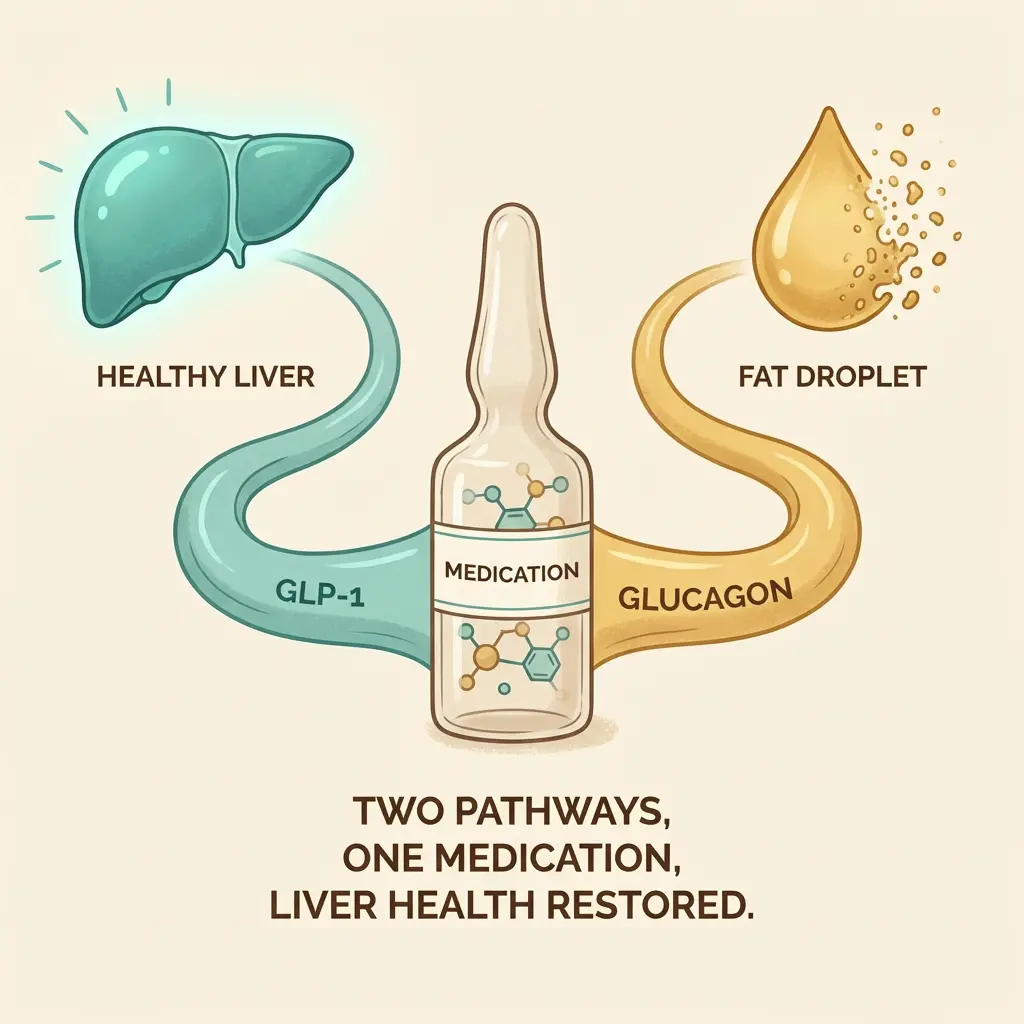

How Survodutide Differs From the Other Next-Gen GLP-1s
The GLP-1 medication landscape is expanding rapidly. Semaglutide (single agonist) was first. Tirzepatide (dual GLP-1/GIP) was second. Now we're seeing the next generation: survodutide (dual GLP-1/glucagon) from Boehringer Ingelheim and retatrutide (triple GLP-1/GIP/glucagon) from Eli Lilly.
Survodutide's specific combination — GLP-1 plus glucagon — is designed for two things: weight loss AND liver fat clearance. The GLP-1 component reduces appetite and improves insulin sensitivity (the familiar mechanism from semaglutide). The glucagon component increases energy expenditure, promotes fat oxidation, and — critically — drives hepatic fat clearance. Your liver actively processes and eliminates stored fat.
This liver angle is why survodutide has a separate clinical trial program specifically for NASH/MASH (metabolic dysfunction-associated steatohepatitis — commonly called fatty liver disease). Phase 2 data showed that survodutide produced liver fat reduction of 80%+ in many participants, with a significant percentage achieving complete resolution of fatty liver. These numbers are extraordinary.
Phase 3 weight loss data shows approximately 19% body weight loss — less than retatrutide's 28.7% but more than semaglutide's 15-17%. The value proposition of survodutide isn't maximum weight loss — it's the combination of meaningful weight loss WITH liver-specific metabolic benefit.
The Fatty Liver Connection Nobody's Talking About
During menopause, the prevalence of non-alcoholic fatty liver disease (NAFLD) increases significantly. Estrogen protects against hepatic fat accumulation. When estrogen declines, liver fat storage increases — even in women who drink little or no alcohol. Some estimates suggest 40-60% of postmenopausal women have some degree of hepatic fat accumulation.
Fatty liver isn't just a liver problem. It drives systemic inflammation, worsens insulin resistance, impairs cholesterol metabolism, and increases cardiovascular risk. It's one of the most consequential and least discussed metabolic shifts of menopause.
A medication that specifically addresses hepatic fat clearance — not just weight loss — is mechanistically targeted at one of the most significant metabolic risks of the hormonal transition. This is what makes survodutide interesting from a menopause medicine perspective, even though the clinical trials haven't specifically studied menopausal women.
When Will Survodutide Be Available?
Survodutide is currently in Phase 3 clinical trials for both obesity and NASH/MASH. Boehringer Ingelheim has not announced a specific FDA submission timeline, but based on trial completion projections, availability is estimated for 2027-2028 — a similar timeframe to retatrutide.
Unlike retatrutide, survodutide is not widely available through research peptide channels. Its dual agonist structure is less commonly compounded. This means the wait for legitimate access is more dependent on FDA approval than on gray-market availability.
In the meantime, women concerned about liver fat and metabolic health can address these issues through: hormonal optimization (estrogen restoration protects against hepatic fat), dietary strategies (reducing refined carbs, alcohol, and increasing omega-3s), targeted supplements (berberine, NAD+, and milk thistle support liver metabolism), and current GLP-1 medications (semaglutide and tirzepatide both improve liver fat to varying degrees, though not as dramatically as survodutide's glucagon-mediated mechanism).