
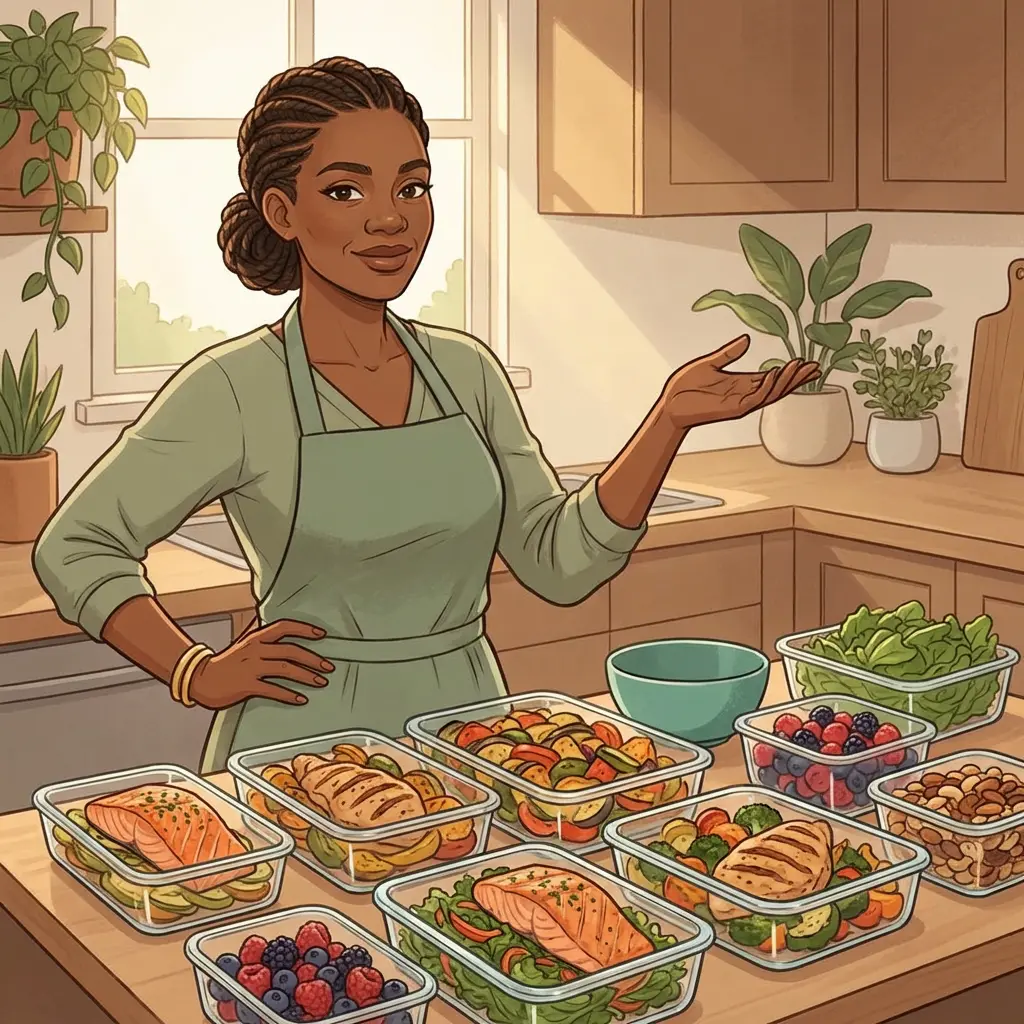

Before the Meal Plan — The 5 Rules That Make Menopause Nutrition Work
RULE 1: PROTEIN FIRST, ALWAYS. Every meal starts with protein. 25-40g minimum. Protein stabilizes blood sugar, preserves muscle (which you're losing from testosterone and growth hormone decline), increases satiety, and triggers GLP-1 release from your gut. Front-loading protein at breakfast sets the metabolic tone for the entire day.
RULE 2: PAIR CARBS, NEVER ALONE. Carbohydrates eaten alone cause rapid blood sugar spikes → insulin surges → fat storage signals → energy crash → more cravings. Always pair carbs with protein and/or healthy fat. The carbs aren't the enemy — eating them in isolation is.
RULE 3: FRONT-LOAD YOUR CARBS. Insulin sensitivity is naturally highest in the morning and declines throughout the day. Eat the majority of your carbohydrates at breakfast and lunch. Keep dinner lower-carb, higher protein/fat.
RULE 4: EAT ANTI-INFLAMMATORY. Menopause increases systemic inflammation. Every meal is an opportunity to reduce inflammation — or feed it. Omega-3 rich foods, colorful vegetables, turmeric, ginger, and green tea reduce inflammation. Ultra-processed foods, refined seed oils, excessive sugar, and alcohol increase it.
RULE 5: DON'T STARVE YOURSELF. Aggressive caloric restriction raises cortisol, promotes muscle loss, slows thyroid function, and can worsen the exact metabolic problems you're trying to fix. Eat enough. Undereating is not a strategy during menopause. It's a trap.
A Sample 5-Day Framework — Flexible, Real, and Hormonally Informed
This isn't a rigid meal plan — it's a FRAMEWORK showing the principles in action. Swap any protein for another, any vegetable for another, any healthy fat for another. The PATTERN is what matters.
DAY 1: BREAKFAST — 3-egg scramble with spinach, avocado, and a slice of sourdough. LUNCH — Grilled chicken salad with mixed greens, quinoa, walnuts, olive oil dressing. SNACK — Greek yogurt with berries and ground flaxseed. DINNER — Wild salmon, roasted broccoli and sweet potato, drizzle of olive oil.
DAY 2: BREAKFAST — Protein smoothie (whey or plant protein, frozen berries, almond butter, spinach, ground flax). LUNCH — Turkey and avocado lettuce wraps with carrot sticks and hummus. SNACK — Apple slices with almond butter. DINNER — Grass-fed beef stir-fry with bok choy, bell peppers, mushrooms over cauliflower rice.
DAY 3: BREAKFAST — Overnight oats with protein powder, chia seeds, walnuts, and berries. LUNCH — Lentil soup with a side of mixed greens and olive oil. SNACK — Handful of macadamia nuts + dark chocolate (85%+). DINNER — Baked cod with roasted asparagus, cherry tomatoes, and a small portion of wild rice.
DAY 4: BREAKFAST — Two-egg omelet with mushrooms, peppers, goat cheese, side of berries. LUNCH — Large salad with grilled shrimp, avocado, chickpeas, cucumber, feta, olive oil lemon dressing. SNACK — Cottage cheese with walnuts. DINNER — Chicken thighs with roasted Brussels sprouts and garlic, side of sautéed kale.
DAY 5: BREAKFAST — Smoked salmon on sprouted grain toast with cream cheese, capers, and arugula. LUNCH — Black bean and sweet potato bowl with salsa, avocado, and cilantro. SNACK — Celery with almond butter and a few raisins. DINNER — Grilled chicken breast with roasted root vegetables and tahini drizzle.
The MVP Foods for Menopause — What to Stock and Why
OMEGA-3 POWERHOUSES: Wild salmon, sardines, mackerel, walnuts, ground flaxseed, chia seeds. Omega-3s reduce inflammation, support brain function, and improve insulin sensitivity. Aim for fatty fish 2-3x per week minimum.
CRUCIFEROUS VEGETABLES: Broccoli, cauliflower, Brussels sprouts, kale, cabbage, arugula. These contain DIM precursors that support healthy estrogen metabolism. Cook them — raw cruciferous can interfere with thyroid function in large amounts.
GROUND FLAXSEED: 1-2 tablespoons daily. Lignans support estrogen metabolism. Fiber supports gut health and blood sugar stability. One of the most cost-effective menopause-supportive foods available.
HIGH-QUALITY PROTEIN: Eggs, chicken, turkey, fish, grass-fed beef, Greek yogurt, cottage cheese, legumes, tofu. Most women undershoot significantly. Calculate 0.7-1g protein per pound of LEAN body weight as your target.
MAGNESIUM-RICH FOODS: Pumpkin seeds, dark chocolate (85%+), almonds, spinach, black beans. Magnesium supports sleep, reduces anxiety, and improves insulin sensitivity.
WHAT TO MINIMIZE: Alcohol (disrupts blood sugar, sleep, estrogen metabolism), refined sugar, ultra-processed foods (inflammatory, nutrient-void), excessive caffeine (elevates cortisol).
Diet Is Necessary But Not Sufficient — Here's What Else Matters
This meal plan can improve how you feel. It can stabilize blood sugar, reduce inflammation, support hormonal health, and shift your metabolic environment. What it CANNOT do is replace the hormones your ovaries stopped making.
If your insulin resistance is driven by estrogen decline, the best diet in the world is fighting upstream. If your cortisol is elevated because progesterone is absent, nutrition can help at the margins but can't restore the missing hormone. If your muscle is declining because testosterone is low, protein alone can slow but not stop the loss without hormonal support.
The women who get the best results from a menopause-optimized diet are the ones who ALSO address their hormonal foundation. Diet + hormones + exercise + targeted supplements = the most complete approach.
At Pause & Reset, we provide nutritional guidance as part of every protocol — not as a standalone intervention, but as the dietary foundation that makes hormonal optimization, GLP-1 therapy, and metabolic support work most effectively.