

Everything Hurts and You Can't Explain Why
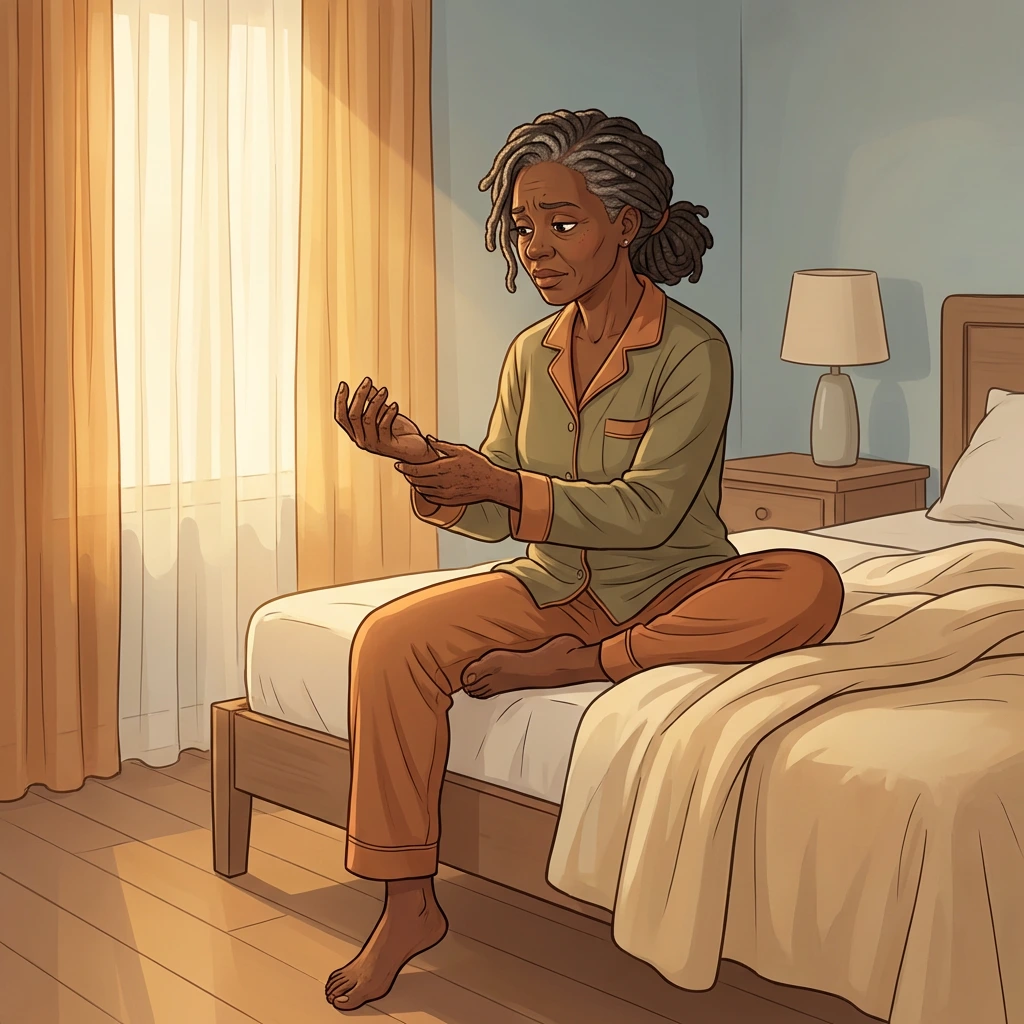
It sneaks up on you. Stiffness in your hands when you first wake up. A knee that aches when you take the stairs. Shoulders that feel tight and sore for no reason. You haven't changed your exercise routine. You haven't injured anything. But your body feels ten years older than it did last year.
Some women describe it as a deep, dull ache — like your joints are inflamed but without any visible swelling. Others notice more specific problems: a hip that bothers them during long walks, ankles that feel stiff after sitting, fingers that hurt when they grip.
What's disorienting is the absence of explanation. You go to your primary care doctor and they suggest it might be early arthritis, or they tell you it's normal wear and tear. But you know your body. This isn't gradual aging. This is something that showed up recently.
"I woke up one morning and my hands wouldn't close properly. I was 44. I felt like I was 70."
— Age 44
Estrogen Was Protecting Your Joints This Whole Time
Estrogen is one of the most effective natural anti-inflammatory agents in the human body. It modulates the immune system, suppresses inflammatory cytokines, and helps maintain the integrity of cartilage, tendons, and the synovial fluid that cushions your joints.
When estrogen declines during perimenopause, that anti-inflammatory protection weakens. Inflammatory markers rise. Cartilage repair slows. Synovial fluid production may decrease. The cumulative effect is joint tissue that's less cushioned, less resilient, and more prone to inflammation.
This isn't the same as osteoarthritis, though it can feel similar. Estrogen-related joint pain is driven by systemic inflammation and tissue changes related to hormone decline, not primarily by mechanical cartilage wear. That distinction matters because the treatment approach is different.
Collagen production also declines with estrogen. Collagen is the structural protein in cartilage, tendons, ligaments, and fascia. Less collagen means less structural support and less tissue elasticity.
How It Happens
Ruling Out What Needs Ruling Out
While hormonal changes are a common and underrecognized cause of joint pain, other conditions should be considered.
Autoimmune conditions like rheumatoid arthritis and lupus can emerge or flare during perimenopause. If you have symmetrical joint swelling, persistent morning stiffness lasting more than an hour, or a family history of autoimmune disease, blood work is warranted.
Thyroid dysfunction — particularly Hashimoto's thyroiditis — commonly causes joint and muscle aches.
Vitamin D deficiency causes musculoskeletal pain that can be mistaken for arthritis. Testing is simple and the solution is straightforward.
Insulin resistance and chronic inflammation create a pro-inflammatory internal environment that worsens joint symptoms.
"Every doctor said 'it's just aging.' But it happened in the span of six months. That's not aging. That's something changing."
— Age 47
Autoimmune Conditions
Rheumatoid arthritis and lupus commonly emerge during perimenopause. Pattern matters — symmetrical joint involvement is a flag.
Ask about: ANA, RF, anti-CCP, ESR, CRP
Thyroid Dysfunction
Hypothyroidism contributes to joint stiffness and myalgia. Often coexists with perimenopause.
Ask about: Full thyroid panel with antibodies
Vitamin D Deficiency
Low vitamin D contributes to musculoskeletal pain and is extremely common in this age group.
Ask about: 25-hydroxy vitamin D (aim for 50-80 ng/mL)
When to See a Provider Promptly
- •Joints are visibly swollen, red, or hot to the touch
- •Morning stiffness lasts more than an hour
- •Pain is severe and progressive
What to Notice Before You Come In
Map which joints are affected. Symmetrical patterns versus asymmetrical involvement point toward different causes.
Note when pain is worst. Morning stiffness that improves with movement is a classic inflammatory pattern. Pain that worsens with activity suggests mechanical issues.
Track how long morning stiffness lasts. Less than 30 minutes is typical of hormonal/inflammatory changes. More than an hour warrants investigation for autoimmune causes.
Document any other symptoms. Fatigue, hair thinning, weight gain, mood changes — these overlap conditions suggest a hormonal and metabolic picture.
Symptom Tracker — Menopause Joint Pain
Track these for 2–4 weeks before your appointment
💾 Save this tracker — bring it to your first appointment
We Connect the Dots Between Your Joints and Your Hormones
At Pause & Reset, joint pain in perimenopausal women isn't treated as an orthopedic problem in isolation. We see it as part of the systemic hormonal and inflammatory picture.
Our evaluation includes hormone levels, inflammatory markers (hs-CRP, ESR), autoimmune screening when indicated, thyroid function, vitamin D, and metabolic markers.
Dr. Nina's approach addresses the root drivers. For many women, hormone optimization — particularly estrogen support — provides meaningful relief from joint pain by restoring anti-inflammatory protection and supporting collagen production.
The goal is not to manage your pain with anti-inflammatories indefinitely. It's to understand why your body is inflamed and address the cause.