
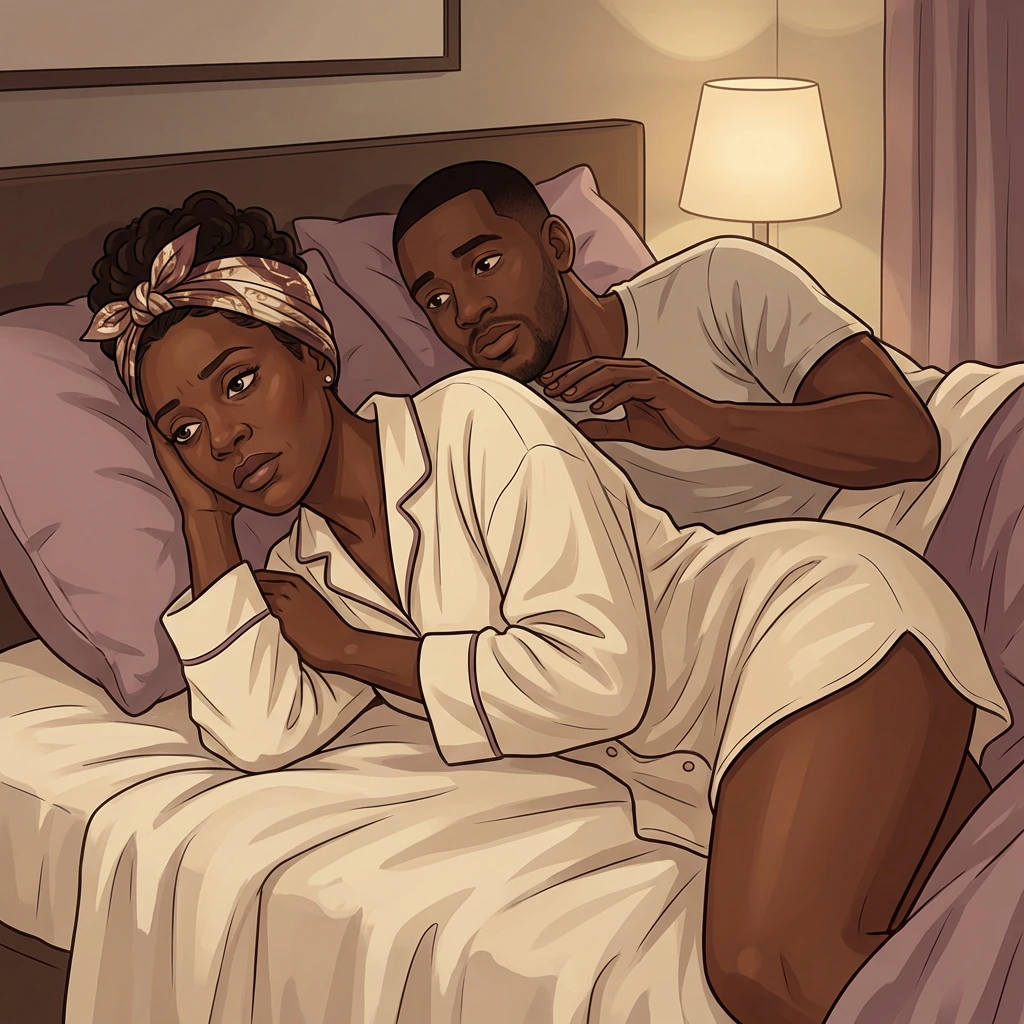

The Desire Just… Isn't There
It usually doesn't disappear overnight. It fades. You realize one day that you haven't thought about sex in weeks — when it used to be part of your mental landscape. Your partner initiates and you feel nothing. Not resentment, not resistance — just absence.
For some women, it's not desire that changed — it's the experience itself. Sex has become uncomfortable or painful. Dryness makes penetration difficult. Sensitivity has decreased. When the physical experience becomes unpleasant, of course desire follows it downward.
The emotional layer is heavy. You may feel guilty — like you're failing your partner, failing your relationship. You may feel grief for the ease that used to be there. You may feel broken, even though you're not.
And nobody talks about it. Your friends aren't posting about this on social media. Your doctor may not ask. So you carry it quietly, wondering if this is just what the rest of your life looks like. It isn't.
"I love my partner. I just couldn't feel anything. Not disinterest — absence. Like that part of me went to sleep."
— Age 48
Desire Has a Biological Infrastructure
Sexual desire isn't just psychological — it has a hormonal architecture. Testosterone, estrogen, and progesterone all play roles in driving libido, arousal, sensitivity, and sexual satisfaction.
Testosterone is the primary hormone of sexual desire in women. Most people think of testosterone as a male hormone, but women produce it too — in smaller amounts — and it's essential for libido and motivation. Testosterone begins declining in your thirties and continues through perimenopause.
Estrogen affects the physical experience of sex. It maintains vaginal tissue health — keeping the mucosal lining thick, elastic, and well-lubricated. When estrogen declines, vaginal tissues become thinner, dryer, and more fragile.
Progesterone contributes to overall mood and relaxation. When you're anxious, sleep-deprived, and emotionally depleted, sexual interest drops as a natural byproduct.
The neurological component matters too. Estrogen and testosterone both influence dopamine — the neurotransmitter associated with anticipation, pleasure, and reward-seeking. When these hormones decline, the motivational circuit that leads you there is running at reduced capacity.
How It Happens
It's Rarely Just One Thing
Low libido during perimenopause is usually multifactorial. Hormones are the foundation, but several other factors commonly contribute.
Relationship dynamics matter. Libido doesn't exist in a vacuum. Unresolved conflict, emotional disconnection, or the routine of a long-term partnership can all suppress desire.
Body image changes affect desire. Many women in perimenopause feel disconnected from their bodies — weight shifts, skin changes, a body that doesn't look or feel familiar.
Medications can suppress libido. SSRIs and SNRIs are common culprits. Blood pressure medications, antihistamines, and hormonal contraceptives can also reduce desire.
Fatigue and stress are libido killers at any age, but during perimenopause they're compounded by hormonal depletion.
Pain during intercourse creates an avoidance pattern. If sex has become uncomfortable, your brain builds an association between sex and discomfort.
"Nobody warned me that hormones could just... turn that off. I thought the problem was my marriage."
— Age 45
Vaginal Atrophy
Thinning vaginal tissue makes intimacy painful, creating a physical barrier that compounds hormonal desire changes.
Ask about: Vaginal estrogen options, moisturizers
Medication Side Effects
SSRIs, blood pressure medications, and antihistamines commonly reduce libido as a side effect.
Ask about: Medication review with provider
Thyroid Dysfunction
Both hypo- and hyperthyroidism affect energy, mood, and desire — all components of libido.
Ask about: Full thyroid panel
When to See a Provider Promptly
- •Changes are sudden and accompanied by other concerning symptoms
- •Pain during intercourse is new and severe
The Conversation Is Easier With Specifics
This is a sensitive topic to discuss with a provider, and having some clarity beforehand helps.
Distinguish between desire and arousal. Desire is wanting sex. Arousal is the physical response. Some women lose desire but can still become aroused. Others have desire but can't achieve physical arousal. The distinction guides treatment.
Note whether the change was gradual or sudden. Gradual decline suggests age-related hormonal changes. Sudden loss may relate to a medication change or life event.
Document any pain or discomfort. Where, when, what kind. Each has specific causes and specific treatments.
Consider the emotional component honestly. Do you feel emotionally connected to your partner? Are there resentments?
List your current medications. Any medication that crosses the blood-brain barrier or affects hormones can potentially impact libido.
Symptom Tracker — Menopause Low Libido
Track these for 2–4 weeks before your appointment
💾 Save this tracker — bring it to your first appointment
We Treat the Whole Picture — With Respect and Without Judgment
At Pause & Reset, conversations about sexual health are treated with the same clinical seriousness and personal sensitivity as any other symptom. Dr. Nina understands that this is one of the most intimate concerns a woman can bring to a provider.
Our evaluation looks at the hormonal drivers first: testosterone levels (often undertested in women), estrogen status, and progesterone. We also assess vaginal health and review medications that may be suppressing desire.
Treatment is tailored to the specific presentation. For women with primarily desire-related changes, testosterone optimization may be the key. For women with physical symptoms, local estrogen therapy can restore comfort. For women dealing with both, a combined approach addresses the biology from multiple angles.
We also recognize that not every dimension of libido loss is hormonal. When relationship dynamics, body image, stress, or emotional factors are significant contributors, we support the whole picture.