
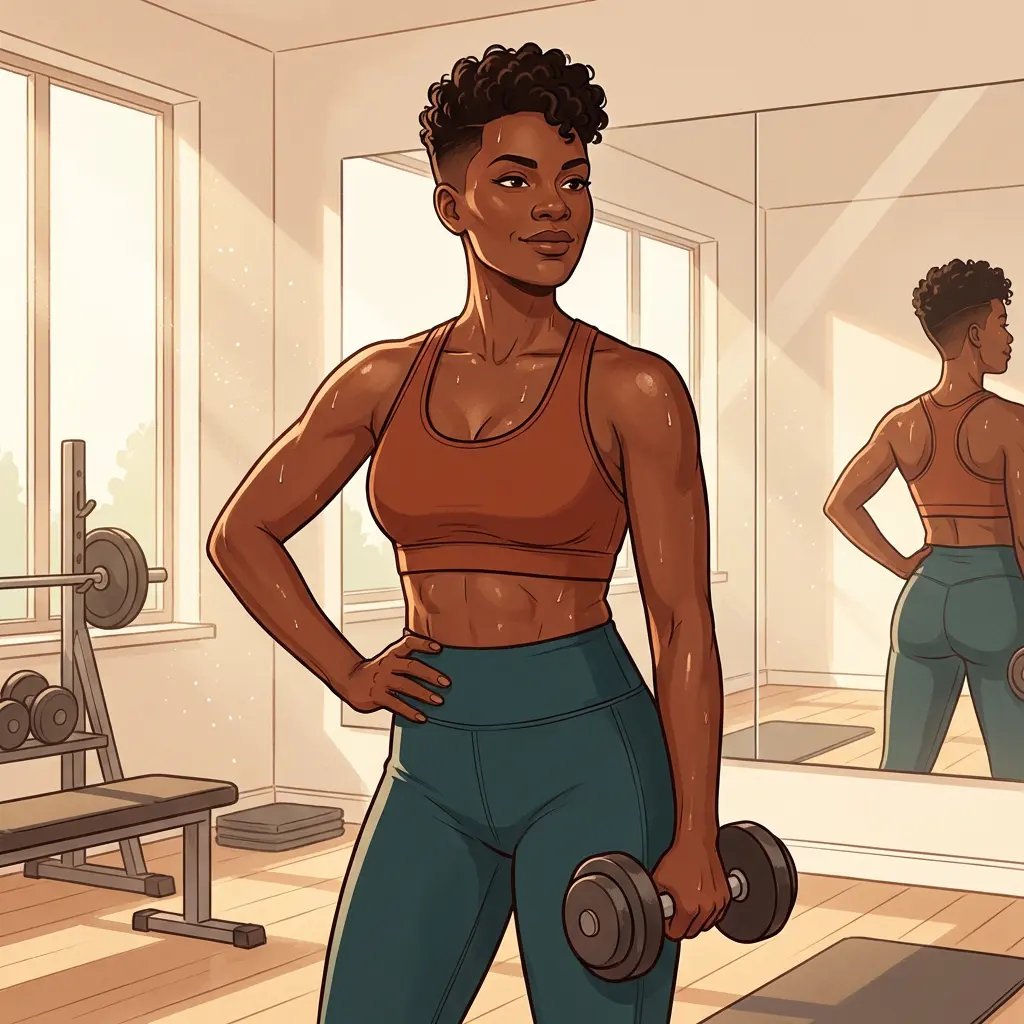

What Testosterone Therapy Looks Like for Women
Testosterone therapy for women uses much lower doses than male testosterone therapy — typically one-tenth the amount. The goal isn't to produce male-range levels. It's to restore testosterone to the optimal female range where it supports desire, energy, motivation, muscle maintenance, and cognitive function without producing masculinizing effects.
The most common delivery method is a compounded topical cream or gel applied to the skin daily — typically to the inner thigh, lower abdomen, or upper arm. Transdermal delivery provides steady absorption and allows precise dose titration. Some providers use subcutaneous pellets, which are implanted under the skin and release testosterone slowly over three to four months. Oral testosterone for women is less commonly used due to liver metabolism concerns.
Dosing is conservative and closely monitored. Starting doses are low, and adjustments are made based on both lab levels and symptom response. The sweet spot is where you feel meaningfully better — more desire, more energy, more drive — without side effects. If side effects appear (which is uncommon at appropriate female doses), the dose is reduced or the delivery method is adjusted.
Testosterone therapy for women is most commonly used alongside estrogen and progesterone as part of a complete hormone optimization strategy. Testosterone alone can be prescribed for specific situations — particularly libido concerns — but it typically works best within the full hormonal context.
"My estrogen and progesterone were optimized but something was still missing. They tested my testosterone — it was almost undetectable. Three weeks after starting it, I felt a fire come back that I hadn't even realized was gone."
— Age 49
What Testosterone Actually Does in the Female Body
Women produce testosterone in the ovaries and adrenal glands — at levels roughly one-tenth to one-twentieth of male production. Despite these lower levels, testosterone plays critical roles in female physiology that go far beyond sexual function.
Sexual desire is the most well-known testosterone function. Testosterone drives the 'wanting' — the motivational circuit that produces interest in and openness to sexual activity. This is distinct from arousal (which estrogen supports). Without adequate testosterone, the desire signal doesn't fire. A woman can be emotionally connected to her partner, physically comfortable, and still feel no motivation toward intimacy. That's the testosterone gap.
Beyond libido, testosterone supports energy and motivation broadly. Women with low testosterone often describe a general flatness — not depression exactly, but an absence of drive. The things that used to excite them don't anymore. Exercise feels harder. Work feels harder. The spark that used to animate their ambitions has dimmed. This overlaps with depression symptoms but doesn't respond to antidepressants in the same way — because the issue isn't serotonin or norepinephrine. It's testosterone.
Testosterone also maintains lean muscle mass, supports bone density, contributes to metabolic rate, and has emerging evidence for neuroprotective effects. The loss of testosterone during perimenopause contributes to the muscle loss, metabolic slowing, and body composition changes that many women experience — effects that are often attributed entirely to estrogen decline when testosterone decline is equally relevant.
How It Happens
The Women Who Benefit Most
Testosterone therapy is most clearly indicated for women with low libido that hasn't responded to estrogen and progesterone optimization alone. If desire has been absent or significantly diminished — particularly if it was present before and declined during perimenopause — testosterone levels should be tested and, if low, addressed.
Women experiencing a general loss of motivation, drive, and vitality may also benefit — especially when these symptoms persist despite adequate estrogen and progesterone levels. The flatness and lack of spark that low testosterone produces is often misidentified as depression, fatigue, or 'just how menopause is.' Testing reveals whether testosterone is a contributing factor.
Women concerned about muscle loss and body composition changes may find that testosterone optimization supports their exercise response. Testosterone helps the body build and maintain lean tissue — and without it, strength training produces diminished results regardless of effort.
Testosterone therapy is NOT appropriate for women who are pregnant or trying to conceive, women with androgen-sensitive cancers, or women with untreated polycystic ovary syndrome (PCOS) where androgens are already elevated. Individual evaluation determines candidacy.
"I told my doctor I had no sex drive. She said it was 'just menopause.' Dr. Nina tested my testosterone and said 'this is why.' That one number changed everything."
— Age 46
Low Libido
The most evidence-supported indication for testosterone in women. If desire is absent despite estrogen/progesterone optimization, testosterone is the likely missing piece.
Ask about: Total testosterone, free testosterone, SHBG testing
Loss of Motivation / Drive
General flatness, loss of ambition, reduced interest in things you used to enjoy. Overlaps with depression but doesn't respond to antidepressants.
Ask about: Testosterone levels + differential from clinical depression
Muscle Loss / Body Composition
Difficulty maintaining muscle despite exercise, shift toward higher body fat percentage.
Ask about: Testosterone + body composition assessment + exercise program review
Cognitive Dullness
Testosterone has emerging evidence for supporting cognitive sharpness, focus, and mental energy — effects mediated through dopamine pathways.
Ask about: Testosterone levels alongside comprehensive cognitive symptom evaluation
When to See a Provider Promptly
- •Pregnancy or actively trying to conceive
- •Androgen-sensitive cancer history
- •Untreated PCOS with elevated androgens
- •Acne, hair growth, or voice changes (may indicate dose needs adjustment)
The Process and the Timeline
Testing comes first. We measure total testosterone, free testosterone (the biologically active fraction), and SHBG (sex hormone-binding globulin, which affects how much testosterone is available to your tissues). These results, combined with your symptom picture, determine whether testosterone supplementation is appropriate and at what dose.
If indicated, treatment typically starts with a low-dose topical cream applied daily. You'll notice changes gradually. Libido improvements may begin within two to four weeks, though full effect can take two to three months. Energy and motivation changes often parallel the libido timeline. Muscle response to exercise may improve over three to six months.
Side effects at appropriate female doses are uncommon. Potential effects to monitor include acne (usually mild, dose-adjustable), increased facial hair (rare at proper doses, reversible with dose reduction), and changes in body odor. These are dose-dependent — and if they appear, the dose is too high for your body and is adjusted downward. Virilizing effects (voice deepening, clitoral enlargement) are associated with supraphysiologic doses and should not occur with properly prescribed female-range therapy.
Follow-up labs at six to eight weeks check both testosterone levels and safety markers. Ongoing monitoring ensures your levels stay in the optimal female range and your body is responding well.
Symptom Tracker — Testosterone Therapy for Women
Track these for 2–4 weeks before your appointment
💾 Save this tracker — bring it to your first appointment
Restoring a Hormone Most Providers Ignore
At Pause & Reset, testosterone is part of the standard perimenopause hormone evaluation — not an afterthought and not something you have to specifically request. Dr. Nina tests total and free testosterone for every woman undergoing comprehensive evaluation because she's seen too many women suffering from symptoms that resolved once this single overlooked hormone was addressed.
We use compounded bioidentical testosterone at individualized doses, titrated to your clinical response and lab values. The goal is the minimum effective dose that restores desire, energy, and vitality without producing unwanted effects. Conservative dosing and close monitoring are non-negotiable.
We also recognize that testosterone doesn't exist in a vacuum. It's part of a hormonal ecosystem that includes estrogen, progesterone, DHEA, cortisol, and thyroid hormones. Testosterone optimization works best when the rest of the hormonal environment is also addressed. A woman with excellent testosterone levels but depleted estrogen, or with high cortisol suppressing testosterone activity, won't get the full benefit from testosterone alone.
The conversation about testosterone in women's health is long overdue. For decades, it was considered a 'male hormone' irrelevant to women. The science says otherwise. And the women who've had it restored say the difference is unmistakable.