

What Hormonal Panic Attacks Feel Like — and Why They're So Terrifying
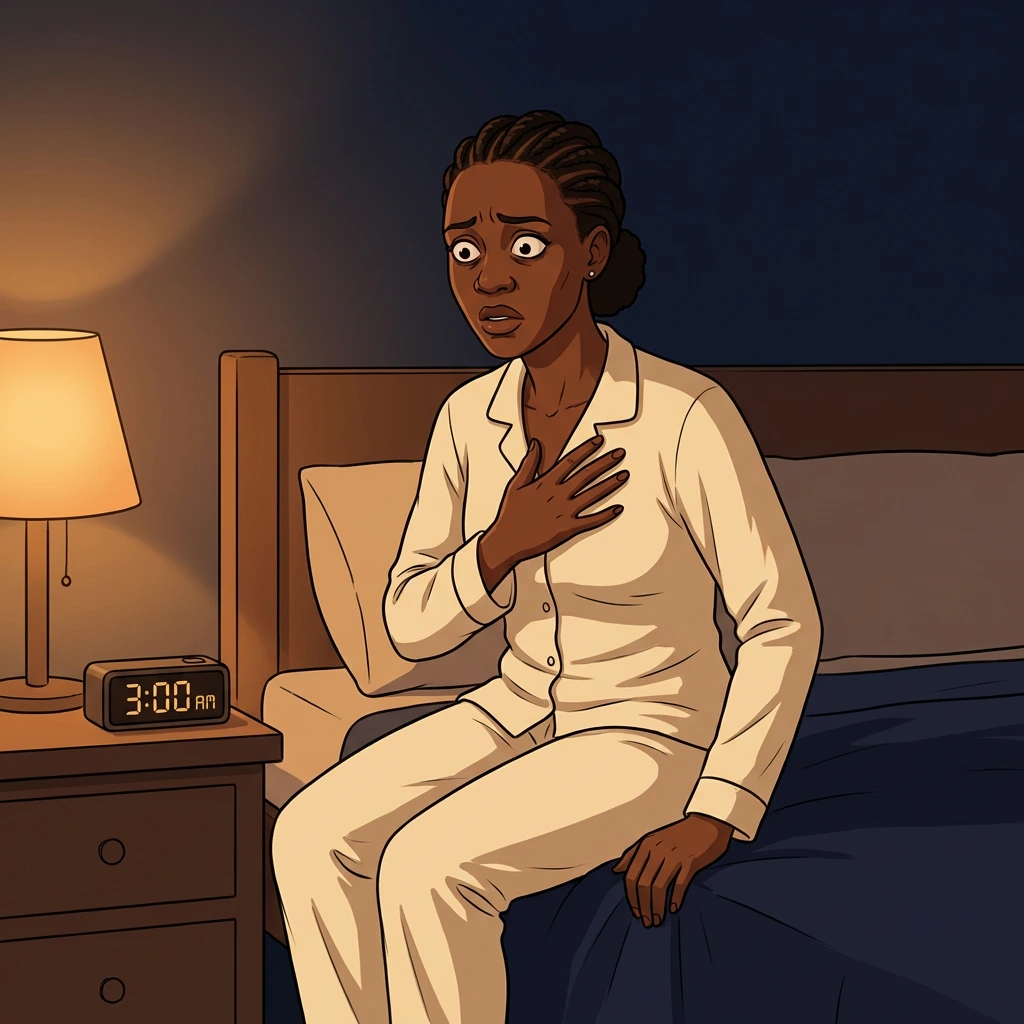
Hormonal panic attacks during perimenopause often present differently from classic panic disorder. They frequently occur at rest — not during stressful situations. Many women report nighttime onset — waking from sleep with a pounding heart, drenched in sweat, and a crushing sense of dread. The physical symptoms can be so intense that women go to the emergency room convinced they're having a heart attack. Racing heart, chest tightness, shortness of breath, dizziness, tingling in the hands, and a feeling of impending doom.
What makes these episodes particularly disorienting is the absence of a trigger. In classic panic disorder, attacks often have situational triggers or develop in the context of generalized anxiety. Hormonal panic attacks can hit a woman who has never been anxious, in the middle of a calm evening, with no identifiable cause. That disconnect — intense physical terror with no logical explanation — is what sends women to cardiologists, pulmonologists, and emergency departments before anyone considers checking their hormones.
Many women experience a sub-panic-attack phenomenon too: episodes of sudden, intense anxiety that don't quite reach full panic but are deeply unsettling. A wave of dread while driving. A surge of fear while watching TV. Heart racing in a meeting for no reason. These may be attenuated panic responses — the same neurochemical mechanism firing at a lower intensity. They're equally hormonal and equally treatable.
The emotional aftermath is significant. Women who've experienced hormonal panic attacks often develop anticipatory anxiety — the fear of having another attack. This secondary anxiety can restrict their lives in ways the original symptoms didn't. They may avoid driving, public places, or situations where an attack would be visible. This avoidance pattern can look like agoraphobia when it's actually a normal response to an unexplained and terrifying physiological event.
"I thought I was dying. ER twice in one month. Heart was fine. Lungs fine. They gave me Ativan and a referral to psychiatry. Six months later someone checked my progesterone — it was nearly zero."
— Age 42
Progesterone, GABA, and Your Brain's Alarm System
The mechanism behind hormonal panic attacks is primarily driven by progesterone decline and its effect on the GABA system. Progesterone is converted to allopregnanolone in the brain, which is one of the most potent positive modulators of GABA-A receptors — the primary inhibitory (calming) neurotransmitter system. GABA is your brain's brake pedal. It prevents neurons from firing too rapidly and keeps the amygdala (your brain's alarm center) from overreacting. When progesterone drops, allopregnanolone drops, GABA activity decreases, and the amygdala becomes hyperreactive.
A hyperreactive amygdala interprets normal physiological sensations — a slight heart rate increase, a momentary chest tightness, a temperature fluctuation — as threats. It triggers the fight-or-flight cascade: adrenaline surges, heart rate spikes, breathing accelerates, muscles tense, and the cortex gets flooded with a signal that something is very wrong. That's a panic attack. And it was triggered not by a real threat but by a brain that lost its calming mechanism.
Estrogen fluctuations add a second layer. Estrogen modulates serotonin, which is involved in both mood regulation and the communication between the cortex (rational brain) and the amygdala (alarm brain). When estrogen spikes and crashes unpredictably during perimenopause, the serotonin system becomes unstable — weakening the cortex's ability to override the amygdala's false alarms. The rational part of your brain that would normally say 'this is fine, you're safe' can't override the alarm signal effectively.
The nocturnal pattern many women describe — waking with panic — has an additional mechanism. Cortisol naturally rises in the early morning hours (the cortisol awakening response). During perimenopause, cortisol regulation can become dysregulated, producing earlier or sharper rises. Combined with the progesterone-depleted GABA environment and hot flash-related sympathetic nervous system activation, this creates a perfect storm for nighttime panic episodes.
How It Happens
Why the ER, the Cardiologist, and the Psychiatrist All Missed the Cause
The typical pathway for a woman with her first panic attack during perimenopause is: ER visit → cardiac workup (normal) → referral to psychiatry or primary care → SSRI or benzodiazepine prescription → nobody checks hormones. Each step makes logical sense in isolation but misses the underlying driver entirely.
The cardiac workup is important — heart palpitations and chest tightness should be evaluated for cardiac causes. But once the heart is cleared, the next question should be 'what's driving the sympathetic nervous system activation?' — not 'which anxiety medication do we try?' Asking the hormonal question at this point would change the treatment trajectory for many women.
SSRIs can help because they increase serotonin, which partially compensates for the estrogen-mediated serotonin instability. But they don't address the progesterone-GABA deficit, and they come with side effects (sexual dysfunction, emotional blunting, weight changes) that many perimenopausal women find intolerable. Benzodiazepines work on GABA receptors directly — which is why they're effective for acute panic — but they carry dependence risk and are not appropriate long-term solutions.
Progesterone — the actual molecule that's missing — enhances GABA activity naturally, without the dependence risk or side effects of benzodiazepines. For many women with new-onset panic attacks during perimenopause, bioidentical progesterone addresses the root cause. Sleep improves. The baseline anxiety drops. The amygdala stops overreacting. And the panic attacks either resolve or become dramatically less frequent and less intense.
"The first one woke me from dead sleep at 3 AM. Heart pounding, couldn't breathe, drenched in sweat. I'd never had anxiety in my life. It was the most terrifying night of my life — and it was progesterone."
— Age 44
Nighttime Panic Episodes
Waking from sleep with racing heart, drenching sweat, and terror. Cortisol awakening response + GABA depletion + hot flash activation.
Ask about: Evening progesterone + cortisol rhythm assessment + hot flash management
Panic with Palpitations
Panic attacks accompanied by heart racing and skipping. Cardiac evaluation first, then hormonal evaluation for the shared driver.
Ask about: Cardiac clearance + comprehensive hormone panel
New Anxiety Without History
Never anxious before. Now baseline dread, waves of fear, constant edge. The GABA deficit creates generalized vulnerability, not just acute attacks.
Ask about: Progesterone + estradiol + thyroid (hyperthyroidism mimics anxiety)
When to See a Provider Promptly
- •Chest pain with exertion, not just at rest — warrants cardiac evaluation first
- •Panic attacks with fainting or loss of consciousness — seek urgent evaluation
- •Suicidal thoughts or severe depression accompanying panic — seek immediate mental health support
What to Do When Panic Arrives Uninvited
First: if you're having chest pain, difficulty breathing, or symptoms suggestive of a cardiac event, get evaluated. Ruling out cardiac causes is appropriate and important. Don't dismiss symptoms assuming they're 'just hormonal' until they've been properly assessed.
Once cardiac causes are ruled out, pursue comprehensive hormonal evaluation. Progesterone tested during the luteal phase is the single most important lab for understanding hormone-driven panic. Full thyroid panel (hyperthyroidism can cause panic-like episodes), cortisol assessment, and the broader hormonal and metabolic picture complete the workup.
For acute management during attacks: slow diaphragmatic breathing (inhale 4 counts, hold 4, exhale 6) activates the parasympathetic nervous system and counters the sympathetic activation. Grounding techniques (naming 5 things you see, 4 you hear, 3 you touch) redirect cortical attention away from the amygdala signal. Cold water on the face or wrists triggers the dive reflex, which slows heart rate. These don't fix the cause but they manage the moment.
Longer-term: progesterone supplementation (evening dosing) addresses the GABA deficit at the root. Many women notice a reduction in both nighttime panic episodes and daytime anxiety within the first one to two weeks. Magnesium glycinate (200-400mg evening) provides additional GABA support. Limiting caffeine and alcohol — both of which destabilize the already-fragile anxiety-regulation system during perimenopause — can reduce attack frequency significantly.
Symptom Tracker — Panic Attacks
Track these for 2–4 weeks before your appointment
💾 Save this tracker — bring it to your first appointment
We Check Hormones Before We Prescribe Anxiety Medication
At Pause & Reset, a woman presenting with new-onset panic attacks in her forties gets a hormonal evaluation before an SSRI prescription. Dr. Nina's approach is to identify the DRIVER — and for many women in this age range, the driver is progesterone decline destabilizing the GABA system, not a primary anxiety disorder.
This doesn't mean we dismiss the anxiety or tell you to tough it out while waiting for lab results. Immediate support — breathing techniques, acute management strategies, and when needed, short-term pharmacological bridging — is available. But the treatment plan is oriented toward fixing the root cause, not indefinitely managing a symptom with medication that doesn't address why the symptom started.
For women who have pre-existing anxiety disorders, the perimenopause evaluation adds essential context. The hormonal transition can amplify existing vulnerability — and optimizing the hormonal environment often reduces the severity of a pre-existing condition. Treatment for anxiety and treatment for perimenopause are not mutually exclusive. They're complementary.
If you went to the ER for what you thought was a heart attack and were told it was a panic attack — and nobody checked your hormones — you haven't been fully evaluated yet. The most important question hasn't been asked.