
Five Skin Changes That Share One Root Cause
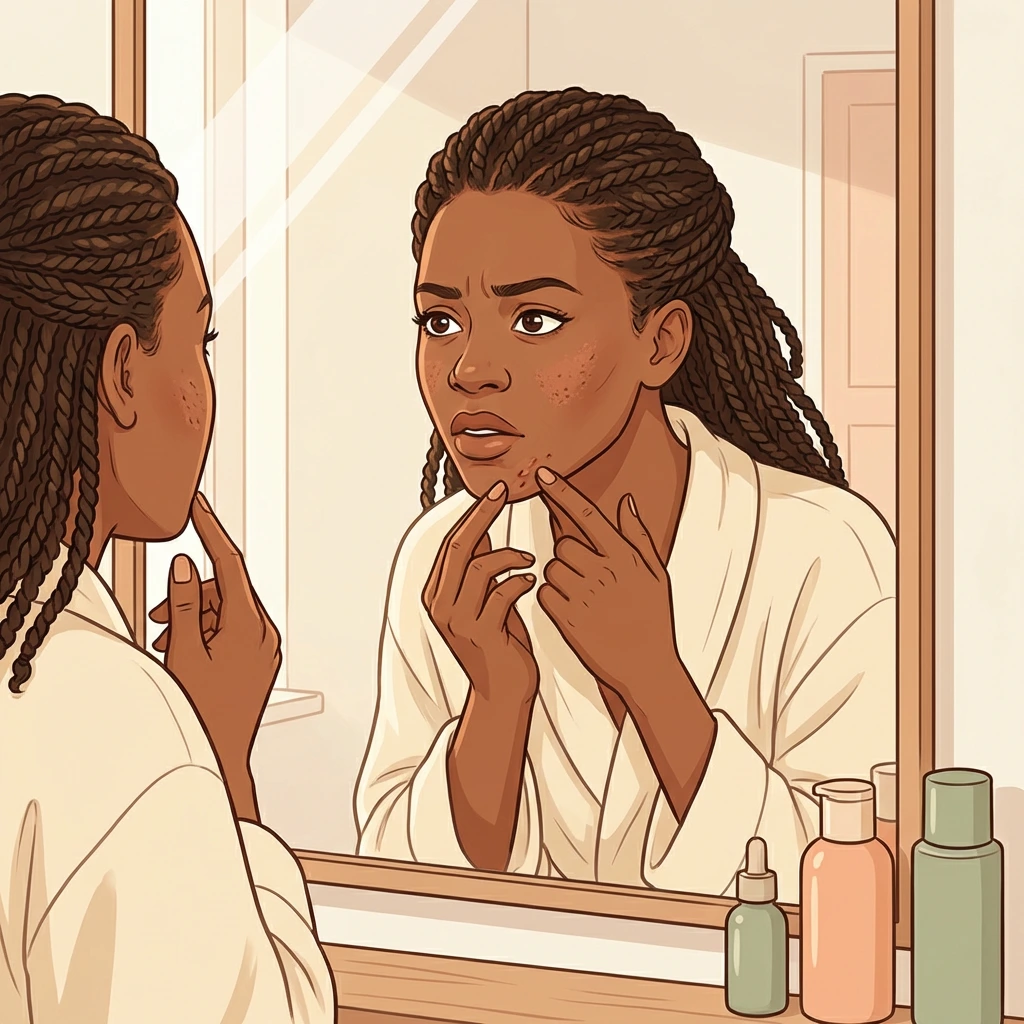
Adult acne during perimenopause catches women completely off guard. You haven't had a pimple since college, and suddenly your jawline, chin, and lower cheeks are breaking out like you're sixteen. This isn't teenage acne returning — it's a hormonally different pattern caused by the shifting ratio between estrogen and androgens. As estrogen declines, androgens like testosterone and DHEA become relatively more dominant, stimulating sebaceous glands to produce more oil and triggering the inflammatory acne pattern characteristic of the perimenopause transition.
Dryness often arrives simultaneously or shortly after — which feels contradictory. How can you have oily breakouts AND parched, flaky skin at the same time? Because different zones of your face and body are responding to different aspects of the hormonal shift. Estrogen supports your skin's hyaluronic acid production, which holds moisture. As estrogen drops, the skin's ability to retain water diminishes — especially on the cheeks, around the eyes, and across the body. You may notice that lotion you've used for years suddenly isn't enough.
Rashes, itching, and skin sensitivity can appear seemingly out of nowhere. Estrogen modulates the immune system and histamine pathways. When estrogen fluctuates, histamine levels can spike — producing itching, hives, flushing, and skin sensitivity that wasn't there before. Some women develop a crawling sensation under the skin called formication — an unsettling symptom that sends many to dermatologists who can't find a cause because they're not checking hormones.
Collagen loss is the silent accelerator underneath all of it. Women lose approximately 30% of their skin collagen in the first five postmenopausal years, and about 2% per year after that. This produces visible thinning, wrinkling, loss of elasticity, and slower wound healing. The skin you see in the mirror at 48 is structurally different from the skin you had at 38 — and the rate of change accelerates during the transition.
"I hadn't had a pimple in twenty years. At 43, my jawline looked like a teenager's and my cheeks were so dry they cracked. Nobody thought to check my hormones until Dr. Nina."
— Age 43
Why Estrogen Is Your Skin's Most Important Ingredient
Your skin is one of the most estrogen-responsive organs in your body. Estrogen receptors are present in the epidermis, dermis, hair follicles, sebaceous glands, and blood vessels of the skin. Estrogen stimulates collagen synthesis, promotes hyaluronic acid production (which holds up to 1,000 times its weight in water), maintains skin thickness, supports blood flow to the skin surface, and modulates sebum production. When estrogen declines, every one of these functions is affected.
The acne mechanism is specifically driven by the androgen-to-estrogen ratio shift. Estrogen normally suppresses androgen activity in the skin. When estrogen drops, androgens become functionally more active — even if their absolute levels haven't changed. This increased androgenic activity at the skin level stimulates sebaceous glands, increases pore size, and promotes the inflammatory cascade that produces hormonal acne. The jawline and lower face distribution is classic for hormonal (as opposed to bacterial or comedonal) acne.
Histamine and estrogen have a bidirectional relationship that most dermatologists don't consider. Estrogen can trigger histamine release from mast cells, and histamine can stimulate estrogen production. During perimenopause, when estrogen surges unpredictably, histamine can spike — producing the itching, rashes, hives, and skin flushing that seem to come from nowhere. This is sometimes called estrogen-mediated mast cell activation, and it explains why antihistamines partially help but don't fully resolve the symptoms.
The collagen decline follows estrogen decline almost lockstep. Estrogen directly stimulates fibroblasts — the cells that produce collagen and elastin. Declining estrogen means less fibroblast activity, less collagen production, and faster degradation of existing collagen by matrix metalloproteinases (MMPs), which become more active with hormonal changes and UV exposure. This isn't just cosmetic — skin thinning increases vulnerability to injury, slows healing, and affects skin's barrier function.
How It Happens
When Skin Changes Signal Something Deeper
Skin symptoms rarely exist in isolation during perimenopause. If your skin changed, your sleep probably did too. Your mood. Your weight. Your energy. The same hormonal shift producing your skin changes is producing your other symptoms — which means treating the skin without addressing the hormonal root is like putting a bandage on the dashboard warning light.
Thyroid dysfunction — which frequently surfaces during perimenopause — has its own skin signature: dry, coarse skin, brittle nails, thinning of the outer eyebrow, and slow wound healing. If your skin changes are accompanied by fatigue, cold intolerance, and weight gain, thyroid evaluation is essential alongside hormonal assessment.
Iron and ferritin depletion (common in women with heavier perimenopause periods) can cause pale, sallow skin, dark circles, and impaired skin healing. Vitamin D deficiency — nearly universal — affects skin cell turnover and immune function in the skin. Gut health shifts during perimenopause can produce skin manifestations through the gut-skin axis, including acne, eczema flares, and sensitivity.
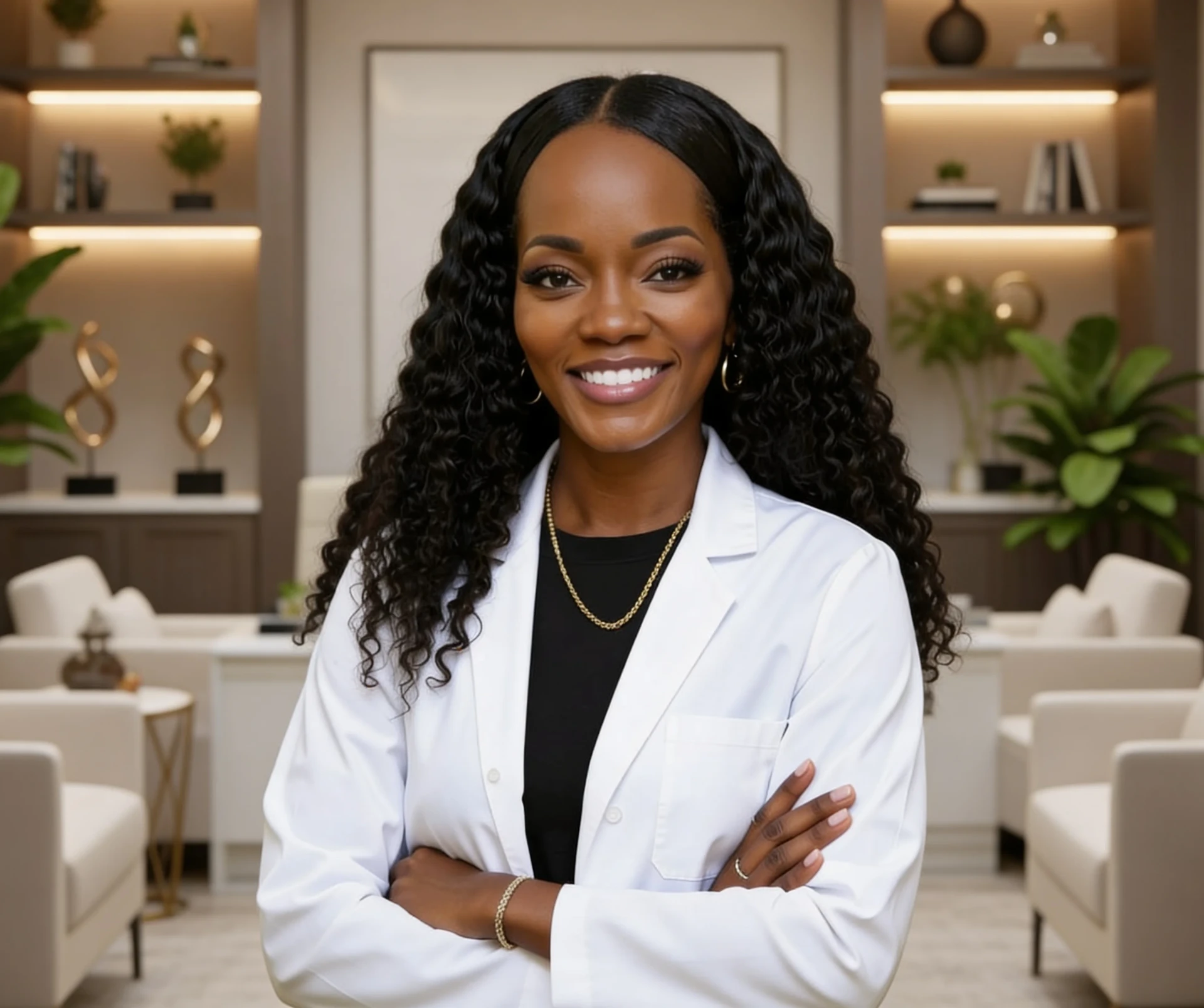
The point is that your skin is a window into your internal hormonal and metabolic environment. A good clinician reads skin changes as data — not as a cosmetic issue to refer to a dermatologist. At Pause & Reset, skin health is part of the comprehensive evaluation because Dr. Nina's training in trichology and hormonal health means she understands the connections between what your skin is doing and what your hormones are doing.
"The itching was making me crazy — all over my body, especially at night. Three dermatologists, two antihistamine prescriptions, zero answers. It was estrogen fluctuations the whole time."
— Age 46
Hormonal Acne (Jawline Pattern)
Breakouts along the jawline and lower face in your 40s = androgen-driven. Topical acne treatments address the surface. Hormonal evaluation addresses the cause.
Ask about: Testosterone, DHEA-S, estradiol ratio + progesterone assessment
Skin Dryness + Sensitivity
Estrogen decline reduces your skin's ability to produce and retain moisture. Lotions that used to work don't anymore.
Ask about: Estradiol levels + hyaluronic acid and ceramide topical support
Itching / Formication / Rashes
Estrogen fluctuations trigger histamine release from mast cells — producing itching, hives, and crawling sensations with no visible cause.
Ask about: Estrogen stability assessment + low-histamine trial + gut health evaluation
Accelerated Aging / Collagen Loss
30% collagen loss in 5 years. Visible thinning, wrinkling, elasticity loss. Sunscreen + retinoids + hormonal support slow the decline.
Ask about: Comprehensive evaluation + evidence-based skincare guidance
When to See a Provider Promptly
- •New moles or changing moles — always evaluate with dermatology regardless of hormonal status
- •Severe rash with fever or systemic symptoms — seek medical evaluation
- •Open sores that won't heal — may indicate immune or vascular issues beyond hormonal causes
What Actually Helps — From the Inside and the Outside
Address the hormonal driver first. For hormonal acne, progesterone support often helps — progesterone has mild anti-androgenic properties that can reduce sebaceous gland stimulation. For women with more significant androgen-driven symptoms, the hormonal evaluation guides whether estrogen optimization, anti-androgen support, or a combination approach is appropriate. Treating the skin topically while the hormonal environment stays imbalanced is a losing strategy.
For dryness and collagen loss, estrogen therapy has demonstrated skin benefits in research — improving hydration, thickness, elasticity, and collagen density. This isn't a cosmetic indication for HRT, but it's a meaningful secondary benefit for women who are taking hormones for symptom management. Topically, hyaluronic acid serums, ceramide-containing moisturizers, and retinoids (which stimulate collagen production) form a strong evidence-based skincare foundation during the transition.
For histamine-related symptoms — itching, rashes, flushing, hives — identifying the estrogen-histamine connection is the first step. Some women benefit from a low-histamine diet trial during flare periods. Antihistamines can provide temporary relief. Addressing gut health (the gut contains significant histamine-producing bacteria) may help at the root. And stabilizing estrogen fluctuations through hormonal support can reduce the mast cell activation that drives the cycle.
Protect what you have. Sunscreen is non-negotiable — UV exposure accelerates collagen breakdown that's already accelerating from estrogen decline. Antioxidants (topical vitamin C, oral omega-3s) help counter the oxidative stress that worsens during the transition. And adequate protein intake supports the amino acids your body needs for collagen synthesis — another reason perimenopause nutrition matters for more than just weight.
Symptom Tracker — Skin Changes
Track these for 2–4 weeks before your appointment
💾 Save this tracker — bring it to your first appointment
Dr. Nina Reads Skin the Way Most Doctors Read Lab Work
At Pause & Reset, skin changes aren't a side note — they're clinical information. Dr. Nina's combined expertise in hormone health and trichology means she evaluates skin, hair, and nail changes as part of the comprehensive hormonal and metabolic picture. Your acne pattern tells her something about your androgen-to-estrogen ratio. Your dryness tells her about your estrogen status. Your itching tells her about histamine and mast cell activity. Your hair and nail quality tell her about thyroid function and nutrient status.
This is different from seeing a dermatologist who prescribes topical treatments without checking hormones, or a gynecologist who addresses hormones without considering skin implications. The integrated approach produces better outcomes because it addresses the system, not just the surface.
Treatment may include hormonal optimization (which often improves skin as a secondary benefit), targeted nutritional support for collagen and skin barrier function, and guidance on evidence-based topical skincare that complements the internal work. For women whose primary concern IS skin and hair changes, this integration is exactly what they've been looking for — a provider who takes their skin seriously enough to look underneath it.
If you've been told your skin changes are 'just aging' or handed a prescription cream without anyone checking your hormones — the evaluation you need goes deeper than the dermatology office. Your skin is telling a story about your hormonal environment. We read the whole story.