
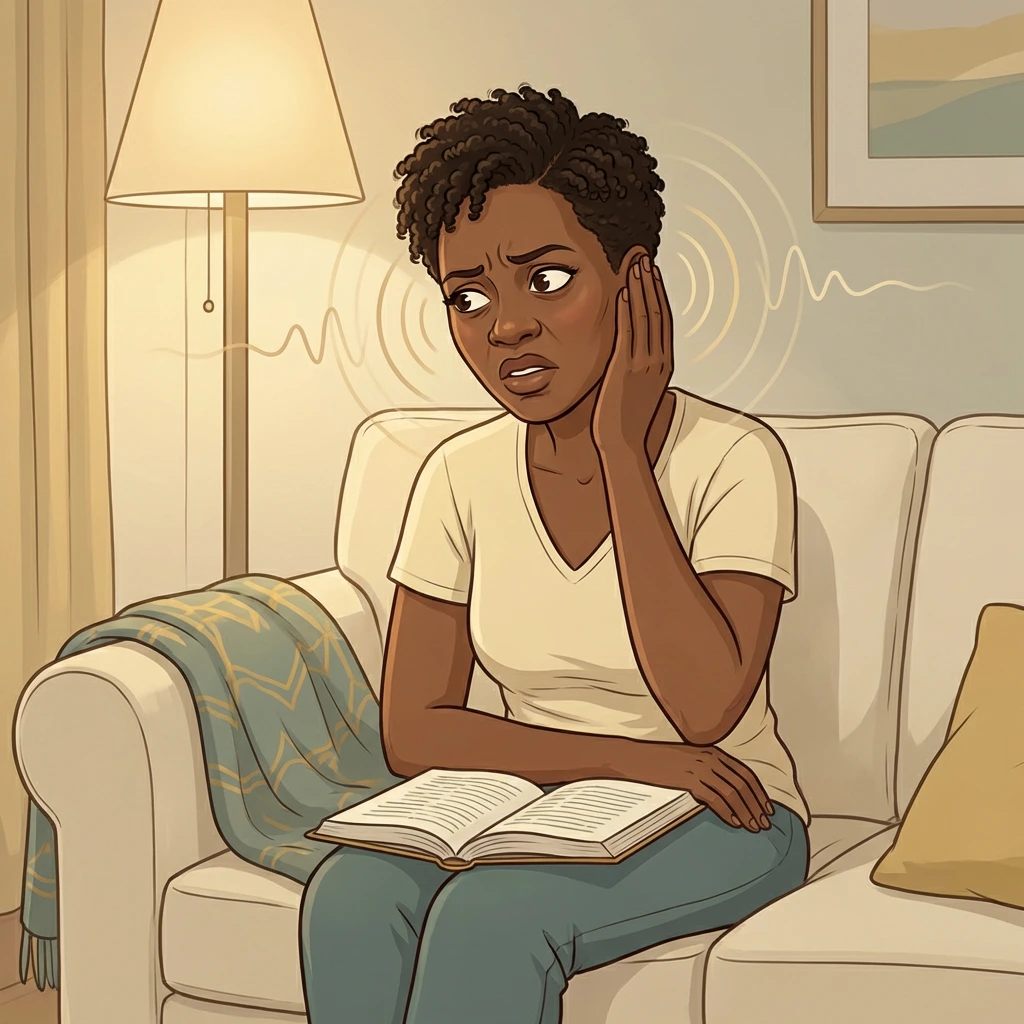

The Sound That Nobody Else Can Hear
It might be a high-pitched ringing that's constant, or a low hum that comes and goes. Some women describe it as buzzing, whooshing, or a pulsatile sound that seems to follow their heartbeat. It started sometime in your late thirties or forties — maybe gradually, maybe suddenly — and it won't go away. You've had your hearing tested. You've seen an ENT. Everything looks 'normal.' But the sound persists.
Tinnitus during perimenopause can be maddening precisely because of its invisibility. Nobody else hears it. Tests come back normal. Doctors shrug. The constant noise erodes your concentration, disrupts your sleep, and amplifies the anxiety that perimenopause may already be producing. Some women find quiet rooms intolerable because the tinnitus becomes the loudest thing in the room.
The timing correlation is what many women notice first — the ringing started around the same time as other perimenopause symptoms. Or it fluctuates with the menstrual cycle, getting louder premenstrually or during periods of hormonal instability. These patterns are clinical clues that point directly to the hormonal connection, but they're rarely asked about in audiology or ENT appointments.
For women already dealing with brain fog, anxiety, and sleep disruption from perimenopause, adding a constant noise to the mix feels like the last straw. The frustration of being told 'there's nothing wrong' when you can clearly hear something wrong is a familiar perimenopause experience — your body is signaling a change that the standard medical workup doesn't capture.
"A constant high-pitched ringing that started at 44. ENT said my hearing was fine. Nobody asked about my menstrual cycle until Dr. Nina. Turns out my ears were fine — my estrogen was not."
— Age 44
Estrogen, Blood Flow, and Auditory Processing
Estrogen receptors have been identified in the cochlea (inner ear), the auditory nerve, and the auditory processing centers of the brain. Estrogen influences blood flow to the inner ear through vasodilation of the small arteries supplying the cochlea. When estrogen declines or fluctuates dramatically, blood flow patterns to the inner ear can change — affecting the delicate hair cells responsible for sound transduction.
Estrogen also modulates neurotransmitter activity in the auditory pathways. Glutamate, the primary excitatory neurotransmitter in auditory nerve signaling, is influenced by estrogen levels. When estrogen fluctuates, glutamate activity can become dysregulated — potentially producing the phantom sound signals that the brain interprets as tinnitus. This is analogous to how estrogen instability affects other neurotransmitter systems during perimenopause.
The pulsatile tinnitus some women describe — a whooshing or throbbing that matches the heartbeat — may relate to cardiovascular changes during perimenopause. Blood pressure fluctuations, changes in blood viscosity, and altered vascular tone (all influenced by estrogen) can produce turbulent blood flow through vessels near the ear that becomes audible. This type of tinnitus warrants cardiovascular assessment in addition to hormonal evaluation.
Stress and cortisol add an amplification layer. The auditory system doesn't just passively receive sound — the brain actively filters and processes it. During periods of high cortisol (common in perimenopause), the brain's filtering becomes less effective, and sounds that would normally be suppressed become consciously perceived. This is why tinnitus often worsens during stress and may improve during periods of relaxation.
How It Happens
When Ear Ringing Connects to Everything Else
Tinnitus during perimenopause rarely exists in isolation. It frequently co-occurs with dizziness or vertigo (the vestibular system shares the same inner ear structures and blood supply), anxiety (the constant noise amplifies the hypervigilance that hormonal anxiety produces), and sleep disruption (tinnitus is loudest in quiet environments — like the bedroom at night).
Thyroid dysfunction can independently cause tinnitus and frequently emerges during perimenopause. Hypothyroidism affects metabolic function throughout the body, including the metabolically active cells of the inner ear. Autoimmune thyroid disease (Hashimoto's) can affect the immune environment of the inner ear. Any tinnitus evaluation during perimenopause should include a comprehensive thyroid panel.
Iron deficiency and anemia — common in perimenopausal women with heavier periods — can contribute to tinnitus through reduced oxygen delivery to the cochlea and altered blood viscosity. Cardiovascular health matters too — blood pressure changes during the menopausal transition can affect the vascular component of tinnitus. These are all addressable factors that the standard ENT evaluation typically doesn't assess.
The point is that tinnitus during perimenopause is a multisystem symptom with hormonal, vascular, metabolic, and neurological components. Treating it requires looking beyond the ear to the environment the ear operates in.
"The whooshing sound in my ears got louder before my period every month. That pattern was the clue that it was hormonal. Once we stabilized my hormones, the sound faded to barely noticeable."
— Age 46
Pulsatile Tinnitus
Whooshing or throbbing matching your heartbeat. May relate to blood pressure changes or vascular tone shifts during perimenopause.
Ask about: Blood pressure monitoring + cardiovascular assessment + hormonal evaluation
Tinnitus + Dizziness/Vertigo
Inner ear shares blood supply and hormone receptors between auditory and vestibular systems.
Ask about: Comprehensive inner ear assessment + hormonal evaluation
Thyroid-Related Tinnitus
Both hypo- and hyperthyroidism can cause tinnitus independently of the estrogen mechanism.
Ask about: Full thyroid panel with antibodies
When to See a Provider Promptly
- •Sudden hearing loss with tinnitus — seek urgent ENT evaluation
- •Pulsatile tinnitus (heartbeat-synced) — warrants vascular assessment
- •Tinnitus with vertigo, nausea, or severe dizziness — evaluate for vestibular conditions
Managing the Sound While Addressing the Source
Hormonal evaluation is the logical starting point when tinnitus emerges during the perimenopause window — especially when it co-occurs with other hormonal symptoms. Estrogen stabilization may reduce the auditory nerve hyperexcitability and blood flow fluctuations contributing to the sound. Women who start hormone therapy for other symptoms sometimes report tinnitus improvement as an unexpected benefit.
Sound therapy can provide significant relief for ongoing tinnitus. White noise machines, nature sounds, or specialized tinnitus masking apps create background sound that reduces the contrast between the tinnitus and silence. Many women find that having ambient sound — especially at night — makes tinnitus far more manageable. This doesn't treat the cause but it substantially improves quality of life.
Stress management directly impacts tinnitus perception. When cortisol is elevated, the brain's sound-filtering becomes less effective and tinnitus perception intensifies. Practices that reduce cortisol — meditation, yoga, regular exercise, adequate sleep — can measurably reduce tinnitus loudness and distress. This isn't 'it's all in your head' — it's neuroscience about how the brain processes sound under stress.
Address the co-factors: get a comprehensive thyroid panel, check iron and ferritin levels, monitor blood pressure, and ensure adequate hydration (dehydration can worsen tinnitus through blood viscosity changes). Caffeine and alcohol may worsen tinnitus for some women and are worth trialing as elimination factors. Magnesium supplementation has shown some benefit in tinnitus studies and supports the broader perimenopause picture.
Symptom Tracker — Tinnitus
Track these for 2–4 weeks before your appointment
💾 Save this tracker — bring it to your first appointment
We Look Beyond the Ear to the Hormonal Environment
At Pause & Reset, tinnitus during perimenopause is evaluated as part of the comprehensive hormonal and metabolic picture — not as an isolated ear problem. Dr. Nina assesses the hormonal environment (estrogen fluctuations, progesterone status), thyroid function, iron status, cardiovascular markers, and cortisol patterns to identify which factors are contributing to the auditory symptom.
This approach doesn't replace ENT evaluation — if you haven't had hearing assessed, that should still happen. But it adds the dimension that ENT and audiology typically miss: the hormonal context. For many women, addressing the hormonal transition improves tinnitus alongside their other symptoms.
If you've been told there's 'nothing wrong' with your ears but the ringing persists — and it started around the same time as your other perimenopause symptoms — the evaluation you need looks at the whole system, not just the auditory component. Your ears are fine. Your hormones are transitioning. And the two are connected.